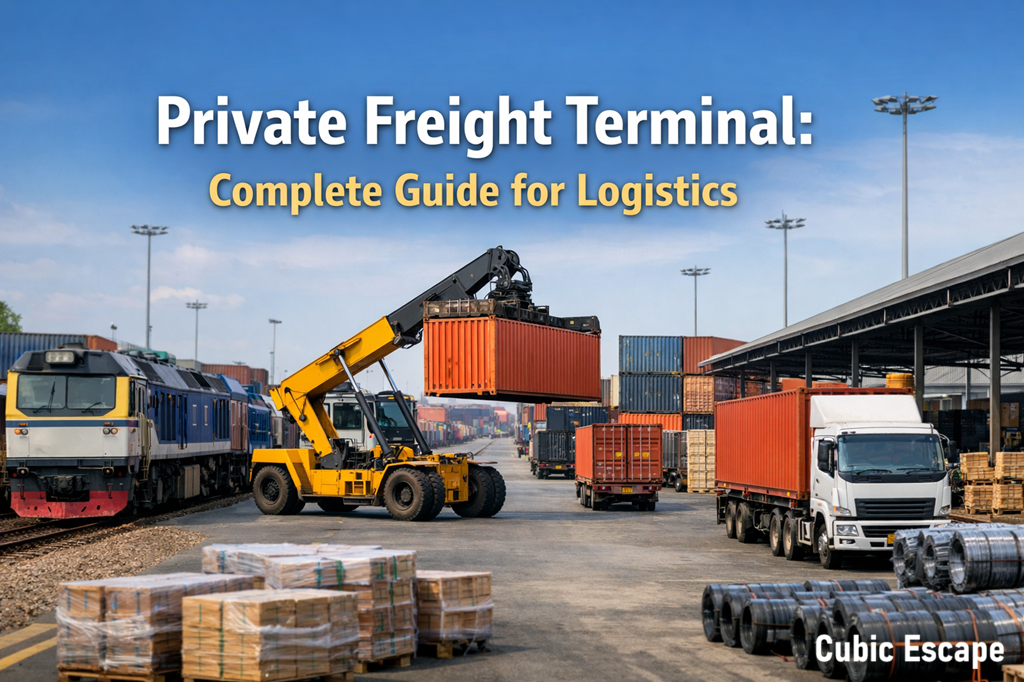
A private freight terminal (PFT) is a privately owned logistics facility that connects to a railway network and enables efficient transfer of cargo between rail and road transport. Unlike public freight terminals managed by government authorities, a private freight terminal is developed on private land and operated by a company under approved railway regulations.
These terminals handle loading, unloading, storage, and dispatch of goods such as containers, bulk materials, and industrial cargo. Because the operator manages infrastructure, scheduling, and cargo flow internally, private freight terminals reduce congestion, improve turnaround time, lower long term logistics costs, and strengthen overall supply chain reliability.
Why Private Freight Terminals Matter in Modern Logistics
Supply chains operate under constant pressure. Customers expect fast delivery, manufacturers require steady raw material supply, and exporters depend on predictable transport schedules.
However, public rail yards often experience congestion and limited flexibility. Therefore, businesses look for infrastructure that offers greater reliability and operational clarity.
A private freight terminal addresses this need by providing:
- Dedicated rail siding and yard space
- Structured truck entry and dispatch planning
- Customized warehousing solutions
- Reduced waiting time
- Better cargo visibility
Since the operator manages operations directly, planning becomes more accurate. As a result, cargo movement becomes smoother and more predictable.
How a Private Freight Terminal Works
A private freight terminal connects rail and road transport within a structured environment. Although layouts vary, the operational process follows a consistent pattern.
Step 1: Rail Arrival
A freight train enters through the terminal’s dedicated siding, which connects to the main railway line. This direct access avoids unnecessary handling at crowded public yards.
Step 2: Cargo Handling
Workers load or unload goods using cranes, forklifts, reach stackers, or conveyor systems. Equipment choice depends on cargo type. Bulk materials require different systems than containers or palletized goods.
Step 3: Storage or Staging
Cargo may move directly to outbound trucks. However, many shipments remain temporarily in warehouses or yard space for sorting and dispatch planning.
Step 4: Road Dispatch
Trucks enter through managed gate systems and exit according to scheduled slots. This organized flow reduces internal congestion.
Step 5: Tracking and Documentation
Digital systems record weight, cargo details, and dispatch timing. Consequently, companies gain real time supply chain visibility.
Core Infrastructure Inside a Private Freight Terminal
A strong private freight terminal depends on durable infrastructure designed for efficiency and safety.
Rail Access
Rail access forms the backbone of the terminal. A siding connects private land to the national railway network, enabling direct train movement.
Cargo Handling Equipment
Most facilities invest in:
- Gantry cranes
- Reach stackers
- Forklifts
- Bulk material loaders
- Weighbridges
Mechanical handling reduces manual risk and improves speed.
Warehousing and Yard Space
Storage infrastructure may include:
- Covered warehouses
- Open cargo yards
- Container stacking zones
- Specialized storage for sensitive goods
This arrangement supports better inventory management near transport links.
Security Systems
Security infrastructure often includes:
- CCTV monitoring
- Managed entry gates
- Vehicle tracking systems
- Perimeter fencing
These systems protect cargo and ensure regulatory compliance.
Private Freight Terminal vs Public Freight Terminal
| Feature | Private Freight Terminal | Public Freight Terminal |
|---|---|---|
| Ownership | Private company | Government authority |
| Operational Control | High | Limited |
| Flexibility | Customized | Standardized |
| Congestion Risk | Lower | Often higher |
| Scheduling | Operator managed | Centrally managed |
Both models support freight movement. However, a private freight terminal provides greater customization for high volume or specialized cargo.
Industries That Use Private Freight Terminals
Private freight terminals serve industries that depend on consistent cargo flow, including:
- Cement and construction materials
- Steel and heavy manufacturing
- Agriculture and food processing
- Coal and energy products
- Chemicals and petrochemicals
- Container logistics
Because these sectors rely on steady supply and dispatch cycles, reliable terminal access becomes essential.
Government Support and Policy Framework
Many governments encourage private participation in freight infrastructure to expand national logistics capacity.
In India, the Private Freight Terminal policy allows companies to develop rail connected terminals on private land under approved guidelines. This framework increases freight handling capacity while reducing pressure on public investment.
Similarly, several countries support inland container depots and multimodal logistics parks operated by private firms. Therefore, private freight terminals fit into broader infrastructure modernization strategies.
Location Strategy for Private Freight Terminals
Location significantly influences terminal performance.
Traditionally, terminals operated near city centers. However, modern development favors industrial corridors and outer zones because:
- Land costs are lower
- Highway connectivity improves truck movement
- Expansion becomes easier
- Urban congestion decreases
This approach allows businesses to scale operations without relocating infrastructure.
Operational Benefits of a Private Freight Terminal
Faster Turnaround
Dedicated scheduling reduces waiting time for trucks and rail wagons.
Lower Logistics Costs
Integrated rail access improves cost efficiency for bulk and long distance transport.
Improved Inventory Control
Centralized handling enhances stock visibility and reduces unexpected shortages.
Stronger Supply Chain Reliability
Predictable operations support better production and delivery planning.
Economic Impact of Private Freight Terminals
Private freight terminals contribute to national logistics efficiency by increasing rail freight share and reducing road congestion. When businesses shift more cargo to rail, fuel use decreases and transport networks operate more efficiently.
In industrial growth corridors, private participation expands freight capacity without placing full financial burden on public rail authorities. As a result, these terminals support export competitiveness, industrial expansion, and long term infrastructure modernization.
This broader impact explains why many governments promote private freight terminal development.
Challenges and Practical Considerations
Despite strong benefits, businesses must evaluate realistic risks:
- High initial capital investment
- Land acquisition and zoning requirements
- Regulatory approvals
- Construction timelines
- Volume risk if demand fluctuates
Careful feasibility analysis and long term contracts help manage these challenges.
Technology and the Future of Private Freight Terminals
Modern logistics increasingly depends on digital systems. Private freight terminals adopt:
- Real time cargo tracking
- Automated yard planning software
- Digital documentation platforms
- IoT sensors for cargo monitoring
These technologies improve transparency, reduce manual errors, and strengthen operational planning.
As global trade expands, private freight terminals will continue integrating with multimodal logistics parks and inland container depots.
Conclusion
A private freight terminal is a privately developed logistics hub that connects rail and road transport to improve cargo movement efficiency. It provides operational flexibility, customized infrastructure, reduced congestion, and stronger supply chain performance.
With growing government support and rising freight demand, private freight terminals now play a vital role in modern logistics networks. While development requires careful planning, the long term benefits include improved efficiency, lower transport costs, and enhanced industrial competitiveness.
Frequently Asked Questions
1. What is a private freight terminal?
A private freight terminal is a privately owned cargo facility that connects to a railway network and enables efficient transfer of goods between trains and trucks.
2. How is a private freight terminal different from a public freight terminal?
A private freight terminal is operated by a private company with customized scheduling and infrastructure, while a public freight terminal is government managed and shared by multiple users.
3. Why do businesses invest in private freight terminals?
Businesses invest to reduce delays, improve cargo handling speed, gain operational flexibility, and strengthen supply chain reliability.
4. Which industries benefit most from private freight terminals?
Industries such as cement, steel, agriculture, chemicals, energy, and container logistics benefit most because they handle high volume or bulk cargo that requires reliable transport infrastructure.
Want more logistics clarity? Stay updated with Cubic Escape.