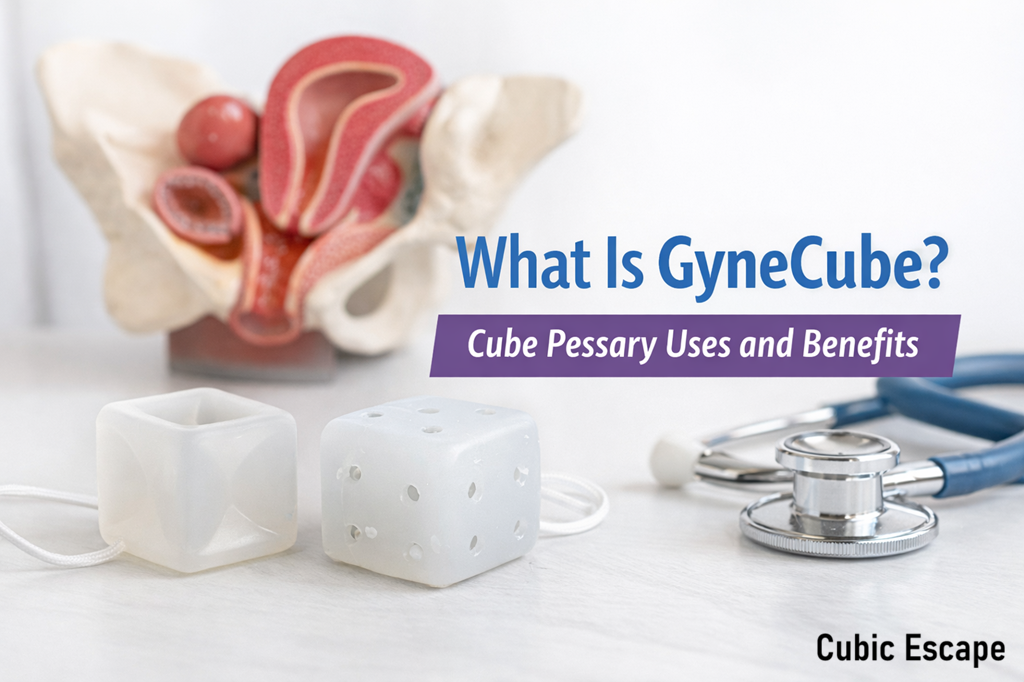
GyneCube is a cube-shaped vaginal pessary designed to support pelvic organs and reduce symptoms of pelvic organ prolapse and stress urinary incontinence. It is also known as a Gyn&Cube pessary and is usually made from medical-grade silicone.
The device is inserted into the vagina where it supports organs such as the bladder, uterus, and rectum. Its concave sides create gentle suction against the vaginal walls, helping it stay in place and provide strong internal support.
Doctors commonly recommend GyneCube as a non-surgical treatment option for moderate or advanced pelvic organ prolapse or for bladder leakage during physical activity.
What GyneCube Is
GyneCube is a soft cube-shaped vaginal support device used to help pelvic organs stay in their normal position.
Pelvic floor tissues can weaken because of:
- Childbirth
- Aging
- Menopause
- Heavy lifting
- Long-term physical strain
When support tissues weaken, organs may drop downward. This condition is called pelvic organ prolapse.
A cube pessary supports these organs and reduces pressure and discomfort.
Because the device is removable, treatment remains flexible and adjustable.
How GyneCube Works
The device works through a combination of shape and gentle suction.
After insertion:
- The soft cube expands
- The sides touch the vaginal walls
- Gentle suction forms
- The device stays stable
- Pelvic organs receive support
Because of this design, cube pessaries often stay in place even during movement and exercise.
When properly fitted, most people do not feel the device.
Conditions Treated
This pessary is mainly used for pelvic support problems.
Pelvic Organ Prolapse
Pelvic organ prolapse occurs when pelvic organs shift downward.
This device may help reduce symptoms of:
Cystocele
The bladder bulges into the vaginal wall.
Rectocele
The rectum presses into the vaginal space.
Uterine prolapse
The uterus drops downward.
Cube pessaries are often recommended for second or third-degree prolapse, especially when ring pessaries do not stay in place.
Stress Urinary Incontinence
This device may also help reduce urine leakage.
Stress urinary incontinence happens during:
- Running
- Jumping
- Exercise
- Coughing
- Lifting
Pelvic support may reduce leakage during sports such as jogging or tennis.
Some people use the device only during physical activity.
Key Features
Most cube pessaries share similar features.
Materials
Typical materials include:
- Medical-grade silicone
- Latex-free construction
- Flexible material
- Reusable design
Silicone devices are soft and durable, which makes them suitable for regular use.
Some models can be sterilized.
Design
Typical design features include:
- Cube or pyramidal shape
- Concave sides
- Smooth surfaces
- Reinforced removal cord
The removal cord helps with safe removal.
Some cords are silicone while others use strong fibers.
Drainage Options
Some versions include drainage holes.
Drainage holes help:
- Reduce moisture buildup
- Improve comfort
- Allow longer wear
- Reduce discharge
Models without holes may need more frequent cleaning.
Sizes and Variants
Different sizes help achieve a proper fit.
Typical Dimensions
| Size | Approximate Measurement |
|---|---|
| Standard | 28 to 38 mm |
| Large | 32 to 44 mm |
Some manufacturers offer sizes from #0 to #10, allowing precise fitting.
Correct size selection improves comfort and effectiveness.
A device that is too small may fall out. A device that is too large may cause irritation.
Professional Fitting
Healthcare providers usually perform pessary fitting.
During fitting, providers may:
- Measure vaginal size
- Test several sizes
- Check comfort
- Check movement
- Test urination
Professional fitting reduces risk and improves results.
Self-fitting without guidance may cause problems.
Comparison With Other Pessaries
Different pessaries provide different levels of support.
| Type | Support Level | Best For |
|---|---|---|
| Ring pessary | Light | Mild prolapse |
| Donut pessary | Medium | Moderate prolapse |
| Gellhorn pessary | Strong | Advanced prolapse |
| Cube pessary | Very strong | Advanced prolapse |
Cube pessaries provide stronger support than most other designs.
However, they usually require more regular cleaning.
Benefits
This treatment offers several advantages.
Physical Benefits
Users often experience:
- Reduced pressure
- Less bulging sensation
- Better bladder support
- Improved comfort
- Easier movement
Support begins soon after insertion.
Lifestyle Benefits
This treatment helps many people stay active.
Benefits include:
- No surgery required
- Removable device
- Adjustable treatment
- Reusable design
- Immediate support
Some people wear it daily. Others use it only during activity.
Risks and Side Effects
This treatment is generally safe when used correctly.
Common Side Effects
Possible minor issues include:
- Vaginal discharge
- Mild irritation
- Odor
- Discomfort from incorrect size
Proper cleaning usually improves these issues.
Less Common Problems
Less common complications include:
- Vaginal sores
- Infection
- Tissue irritation
Regular medical checkups reduce risk.
Safe Use Instructions
Healthcare providers usually teach safe use.
Insertion
Typical steps include:
- Wash hands
- Compress the cube
- Apply lubricant
- Insert gently
- Allow expansion
The device usually positions itself naturally.
Removal
Removal should be gentle.
Typical steps include:
- Locate the removal cord
- Pull gently
- Break suction with a finger
- Compress the cube
- Remove slowly
Breaking suction improves comfort.
Cleaning and Maintenance
Regular cleaning is important.
Typical care includes:
- Remove as advised
- Wash with mild soap
- Rinse thoroughly
- Dry completely
- Store in a clean container
Good hygiene reduces irritation risk.
Who This Treatment Is Best For
This treatment may suit people who:
- Have moderate or advanced prolapse
- Need strong support
- Want to avoid surgery
- Cannot keep a ring pessary in place
- Need support during activity
- Prefer removable treatment
Medical advice helps confirm suitability.
Long Term Use
Many people use cube pessaries for long periods.
Safe long-term use requires:
- Correct sizing
- Regular cleaning
- Medical checkups
- Monitoring symptoms
Treatment can continue if the device remains comfortable.
Frequently Asked Questions
Is GyneCube safe?
Yes. When fitted correctly and cleaned regularly, GyneCube is considered safe for pelvic support.
Can GyneCube cure prolapse?
No.
It helps control symptoms but does not cure pelvic organ prolapse.
Can it be worn daily?
Yes.
Some people wear it daily while others remove it at night.
Follow medical advice.
Is GyneCube comfortable?
Most people do not feel the device when the size is correct.
Comfort depends on proper fitting.
Do I need a doctor?
Professional fitting is strongly recommended.
Correct sizing improves safety and comfort.
Final Summary
GyneCube is a cube-shaped vaginal pessary that supports pelvic organs and reduces symptoms of prolapse and urinary leakage. It provides strong internal support without surgery and allows flexible treatment.
When properly fitted and maintained, this cube pessary offers a safe and practical option for managing pelvic support problems.
Read the latest insights on Cubic Escape.