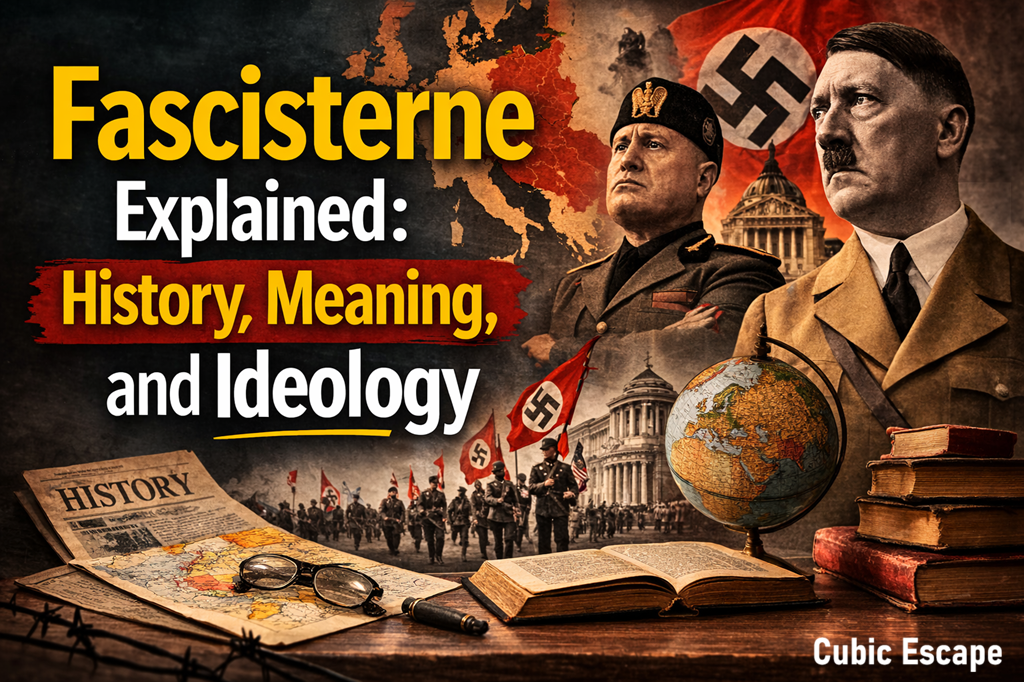
Fascisterne is a Danish and Scandinavian word that means “the fascists.” It refers to people or political groups that support fascism, an ideology built around strong central leadership, intense nationalism, and strict control of society by the state.
Fascism became widely known in the early twentieth century, especially in Europe under leaders like Benito Mussolini in Italy and Adolf Hitler in Germany. These governments rejected democratic systems and concentrated political power in a single authority.
Understanding fascisterne helps explain how fascist movements formed, why they gained support during difficult historical periods, and what lessons modern societies can learn from their impact. In this article, we will explore the meaning of fascisterne, the origins of fascism, its main ideas, important historical figures, and why studying this topic still matters today.
What Does Fascisterne Mean
The word fascisterne comes from Danish and Norwegian language usage. It literally translates to “the fascists.”
The term describes individuals, political groups, or movements that follow fascist ideas. Fascism places strong emphasis on national unity, loyalty to the state, and centralized political authority.
In historical discussions, the word often appears when scholars talk about European political movements that developed during the early twentieth century.
Today, historians and political scientists use the term carefully to describe specific political ideologies and historical regimes.
The Historical Origins of Fascism
Political Instability After World War I
The roots of fascism developed after World War I, when many countries faced severe political and economic problems.
Large numbers of people experienced unemployment, inflation, and social unrest. Governments struggled to maintain stability, and many citizens lost trust in traditional political systems.
During this uncertain time, some leaders promised strong government authority and national revival. These promises helped fascist movements attract support.
The Rise of Fascism in Italy
Italy became the first country where fascism gained national power.
In 1922, Benito Mussolini formed a government based on fascist principles. His movement promoted national pride, political discipline, and loyalty to the state.
Mussolini’s political model later influenced similar movements in other European countries.
Core Ideas Behind Fascisterne
Historians identify several key beliefs that often appear in fascist political systems.
Strong Central Leadership
Fascist governments usually concentrate political power in a single leader or ruling party. Supporters often view the leader as the symbol of national unity.
Extreme Nationalism
National identity becomes a central focus. The nation is often presented as more important than individual rights or political differences.
Limited Political Opposition
Fascist systems typically restrict political competition. Governments may limit opposition parties and control public debate.
Control of Media and Information
Many fascist governments use propaganda and media control to influence public opinion and strengthen national unity.
Military Strength and Social Discipline
Military values such as discipline, loyalty, and sacrifice often become important elements in fascist political culture.
Major Historical Leaders Associated With Fascism
Several leaders became closely connected with fascist political movements during the twentieth century.
| Leader | Country | Historical Role |
|---|---|---|
| Benito Mussolini | Italy | Founder of the first fascist government |
| Adolf Hitler | Germany | Leader of Nazi Germany during World War II |
| Francisco Franco | Spain | Long-time authoritarian nationalist ruler |
Each of these leaders shaped political systems that emphasized centralized power and strict political control.
The Spread of Fascist Movements
During the 1920s and 1930s, fascist movements spread to different parts of Europe.
Economic hardship, political fear, and national frustration helped these movements gain attention and support.
Many supporters believed strong leadership could restore order and national pride. However, once these governments gained power, they often restricted political freedoms and strengthened centralized control.
These developments influenced international relations and contributed to growing global tensions before World War II.
Consequences of Fascist Rule
The impact of fascist governments shaped major events in modern history.
Loss of Democratic Rights
Many fascist regimes removed democratic systems such as competitive elections, free speech, and independent political organizations.
Suppression of Political Opponents
Governments frequently silenced critics through censorship, imprisonment, or political pressure.
Human Rights Violations
In some cases, fascist ideology promoted racial or national superiority. This led to discrimination, persecution, and violence against minority groups.
Contribution to Global War
Expansionist policies and military aggression contributed to the outbreak of World War II, one of the most destructive conflicts in history.
Why Understanding Fascisterne Still Matters
Studying fascism remains important for historians, educators, and citizens.
Learning about past political systems helps people understand how democratic institutions can weaken during times of crisis.
It also highlights warning signs such as extreme nationalism, political intolerance, and concentration of power.
When societies understand these patterns, they are better prepared to protect democratic values and civil rights.
Frequently Asked Questions
What does Fascisterne mean?
Fascisterne means “the fascists” in Danish and refers to people or groups who support fascist political ideology.
What is fascism in simple terms?
Fascism is a political system where a strong leader controls the state and limits political freedom.
Where did fascism begin?
Fascism first gained power in Italy in 1922 under the leadership of Benito Mussolini.
Why do historians study fascism today?
Historians study fascism to understand authoritarian regimes and protect democratic institutions and human rights.
Did fascism influence World War II?
Yes. Fascist governments and expansionist policies played a major role in the events leading to World War II.
Conclusion
The history of fascisterne forms an important part of modern political history. Fascist movements grew during times of economic hardship and political uncertainty. They promised order, unity, and national strength.
However, history shows that these systems often reduced freedom and weakened democratic institutions. Their actions reshaped global politics and led to profound human consequences.
Understanding fascisterne is therefore not only about learning history. It is also about recognizing how political systems evolve and why democratic values remain essential for stable and open societies.
Want more well explained stories like this? Visit Cubic Escape for trusted articles that make complex topics simple.