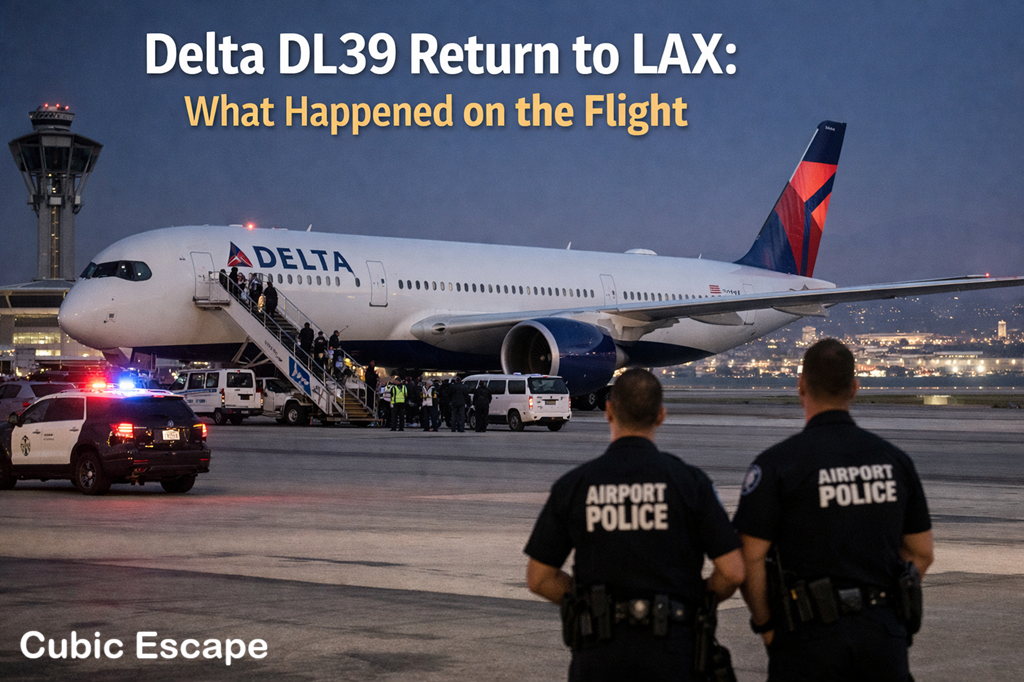
Delta Air Lines flight DL39, a long-haul international flight from Los Angeles International Airport (LAX) to Shanghai Pudong International Airport (PVG), returned to Los Angeles after a passenger disruption created a safety concern during the journey.
The aircraft, an Airbus A350-900, had already been flying across the Pacific Ocean for several hours when the cabin crew informed the pilots about the situation. After reviewing the risk, the flight crew decided to turn the aircraft around and return to LAX.
The plane landed safely, authorities removed the disruptive passenger, and the airline began assisting travelers with new travel arrangements. The decision reflected a basic rule of aviation: safety always comes first.
Understanding Delta Flight DL39
The Route Between Los Angeles and Shanghai
Delta DL39 connects two major global cities.
The flight travels from Los Angeles, California in the United States to Shanghai, China, one of the world’s largest economic centers.
| Route | Distance | Average Flight Time |
|---|---|---|
| Los Angeles (LAX) to Shanghai (PVG) | About 6,400 miles | Around 13 hours |
Because the aircraft crosses the Pacific Ocean, the flight spends long periods far from land. This makes careful planning very important.
Pilots must always consider fuel levels, weather, and possible alternate airports.
Timeline of the Delta DL39 Return to LAX
Understanding what happened becomes easier when we look at the sequence of events.
Normal Departure from Los Angeles
Passengers boarded the Airbus A350 at Los Angeles International Airport.
The aircraft departed normally and began its long journey toward Asia.
Everything appeared routine during the early part of the flight.
A Disruptive Passenger Incident
Several hours after departure, a passenger reportedly began behaving in a way that disrupted the cabin.
Flight attendants noticed the issue and followed airline procedures by informing the pilots.
Crew members are trained to quickly report any situation that may affect safety.
The Crew Evaluated the Situation
Once the pilots received the report, they assessed the situation carefully.
The captain must consider several factors before deciding whether to continue or divert a flight. These factors include:
- Passenger and crew safety
- Cabin control
- Distance from diversion airports
- Fuel planning
Because the flight had already entered the Pacific crossing, the options were limited.
Decision to Return to Los Angeles
After evaluating the risk, the flight crew decided that returning to the departure airport was the safest option.
The aircraft turned around over the Pacific Ocean and began flying back toward Los Angeles.
Although the decision caused a major delay, the crew focused on keeping everyone safe.
Safe Landing at LAX
The aircraft landed safely back at Los Angeles International Airport.
Airport authorities met the flight and removed the disruptive passenger.
Airline staff then began helping passengers with new travel plans.
The Aircraft Used for the Flight
Delta operated flight DL39 using the Airbus A350-900, a modern wide-body aircraft built for long international routes.
This aircraft includes many advanced features.
Key characteristics of the Airbus A350
- Designed for ultra long distance travel
- Improved fuel efficiency
- Advanced cockpit technology
- Quiet and comfortable cabin
- Strong safety monitoring systems
Airlines often use the A350 for routes between North America and Asia because it can fly very long distances without stopping.
Why Airlines Sometimes Turn a Flight Around
Turning a plane around in the middle of a journey is rare. However, it happens when safety becomes uncertain.
Several factors can lead to this decision.
Safety Comes First
The most important responsibility of a pilot is protecting passengers and crew.
If a passenger disrupts the cabin environment or interferes with crew duties, the situation can quickly become serious.
Pilots will never take unnecessary risks.
Limited Airports Over the Ocean
Flights between the United States and Asia spend hours over open water.
During that time, nearby airports may not be available.
Returning to the departure airport can sometimes be the safest and simplest solution.
Legal Authority of the Pilot
International aviation rules give the pilot in command full authority over the aircraft.
If the captain believes that continuing the flight could create a safety risk, they can divert or return the aircraft.
Read More | Delta Flight DL275 Diverted LAX: Causes and Safety Details
What Happens After a Flight Returns Unexpectedly
When a flight returns to its departure airport, several processes begin immediately.
Security and Law Enforcement
Airport authorities usually meet the aircraft at the gate.
If a passenger caused the disruption, law enforcement officers may remove the person and begin an investigation.
Passenger Support
Airlines then assist travelers who were affected by the delay.
Passengers may receive:
- Flight rebooking
- Meal vouchers
- Hotel accommodation if necessary
- Customer support assistance
Airlines try to minimize disruption as much as possible.
Aircraft Preparation
Before the aircraft departs again, technicians may inspect it and prepare it for the next scheduled flight.
This ensures that everything remains safe and operational.
The Cost of Turning Back a Long Distance Flight
Returning a long-haul flight can cost airlines a large amount of money.
Several factors contribute to the expense.
| Cost Category | Description |
|---|---|
| Fuel | Thousands of gallons used during the return flight |
| Crew scheduling | Additional staff may be required |
| Passenger support | Hotels, meals, and rebooking |
| Operational disruption | Aircraft schedules may change |
Despite these costs, airlines always prioritize safety.
Protecting passengers is more important than operational efficiency.
Unruly Passenger Incidents in Modern Aviation
Disruptive passenger incidents have increased in recent years across the airline industry.
Aviation authorities report that the most common causes include:
- Alcohol related behavior
- Refusing to follow safety instructions
- Arguments with crew members
- Aggressive behavior toward passengers
Airlines and regulators take these incidents very seriously.
Many countries impose heavy fines and legal penalties on passengers who interfere with flight operations.
Why the Delta DL39 Event Attracted Attention
The story of Delta DL39 quickly spread across aviation news and social media.
Several factors made the incident unusual.
A Long Flight to Nowhere
Passengers spent many hours flying before returning to the same airport.
A Rare Mid Ocean Turnaround
Turning back during a transpacific flight is uncommon.
Public Interest in Aviation Safety
People often feel curious about how pilots make difficult decisions during long international flights.
The event offered a real example of those decisions in action.
Lessons From the Delta DL39 Return to LAX
The return of Delta flight DL39 highlights several important lessons about modern air travel.
Passenger behavior matters
One person’s actions can affect hundreds of travelers.
Pilots must make fast decisions
Flight crews often make complex safety decisions far from land.
Safety systems work
Airlines train crews to respond quickly to unusual situations.
Events like this show how those systems protect passengers.
Conclusion
Delta DL39 Return to LAX shows how carefully airlines manage safety during long international flights.
A journey that began as a normal trip from Los Angeles to Shanghai changed course when a passenger disruption created uncertainty in the cabin. The flight crew responded by following strict safety procedures and returning the aircraft to LAX.
Although the decision caused delays for travelers, it demonstrated the professionalism of airline crews and the strong safety culture of modern aviation.
In the end, the story of Delta DL39 reminds us of something important. Behind every flight is a team of trained professionals who place safety above everything else. Their careful decisions ensure that air travel remains one of the safest ways to move around the world.