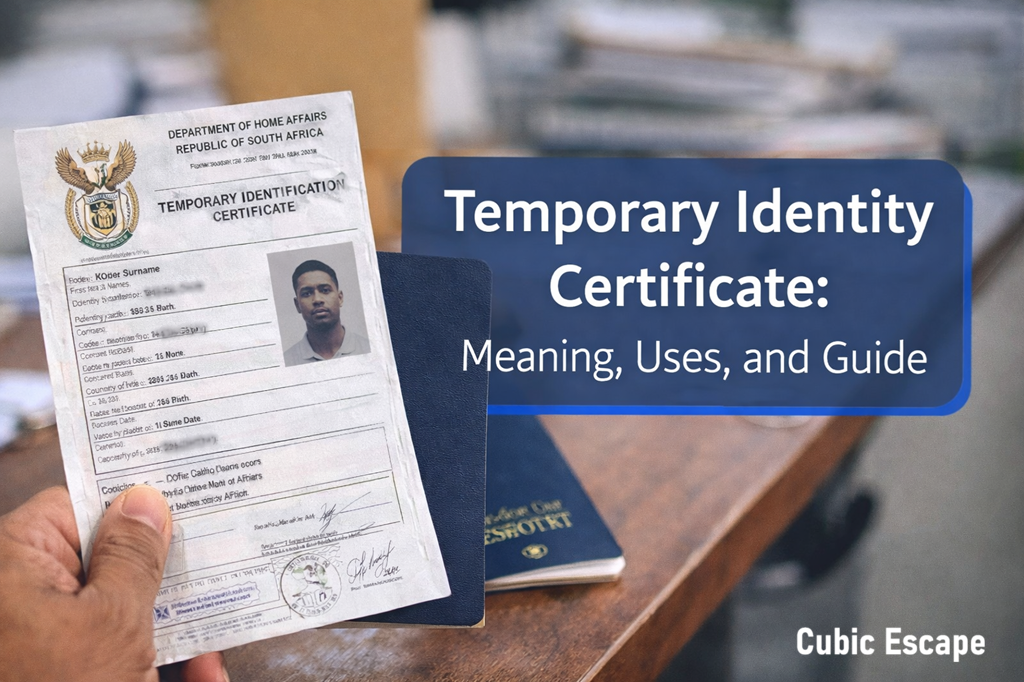
A Temporary Identity Certificate is an official short term document that confirms a person’s identity while they wait for a permanent identification document such as a national ID card, passport, or driver’s license.
Government offices or authorized institutions issue this certificate when a person’s original ID is lost, expired, or still being prepared. It allows individuals to continue important activities like working, opening a bank account, enrolling in school, or accessing public services.
Most temporary identity certificates remain valid for a limited time, often 30 to 90 days, depending on the issuing authority.
In simple terms, this certificate acts as temporary proof of identity until the permanent document becomes available.
What Is a Temporary Identity Certificate?
A Temporary Identity Certificate is a short term identity document issued by a government authority or another official organization. It confirms that a person’s identity has been verified even though their permanent identification is not yet available.
In modern society, identity verification is necessary for many everyday tasks. People often need identification to work, travel, open bank accounts, receive healthcare, or access government programs.
When a person does not have their official ID, daily life can quickly become difficult. A temporary identity certificate helps solve this problem.
It provides official confirmation of identity while the permanent document is being issued, renewed, or replaced.
Even though the document is temporary, many organizations accept it as valid identification during the time it remains active.
Why Temporary Identity Certificates Are Important
Identity systems must protect security while also allowing people to continue their normal lives.
Temporary identity certificates help maintain this balance.
Without this type of document, people could face serious problems when their official identification is missing or delayed.
For example, someone who loses their ID might not be able to start a new job, access banking services, or complete important paperwork.
A temporary certificate helps prevent these disruptions by providing short term identity verification.
This approach protects both government identity systems and everyday access to essential services.
Common Situations When a Temporary Identity Certificate Is Issed
Authorities usually issue temporary identity certificates during periods of change or delay in official documentation.
Lost or Stolen Identification
If someone loses their passport, national ID card, or driver’s license, authorities may issue a temporary certificate while a replacement document is prepared.
ID Renewal Process
Many identity documents require renewal after several years. During this processing time, a temporary certificate may be provided.
First Time Identity Registration
Young adults or new residents sometimes apply for their first official identification. Temporary documentation may be issued until the permanent ID card is produced.
Immigration or Residency Applications
In some countries, immigration offices issue temporary identity documents while residence permits or refugee registration are under review.
Emergency Situations
Natural disasters, evacuation events, or urgent travel situations may require fast identity verification. Temporary certificates allow authorities to confirm identity quickly.
Key Features of a Temporary Identity Certificate
Although design and format may vary across countries, most temporary identity certificates include several common features.
Limited Validity
The certificate remains valid only for a short period. Most documents last between 30 and 90 days.
The expiration date is clearly printed on the document.
Official Issuing Authority
Government departments normally issue these certificates. Examples include:
- National identity authorities
- Passport offices
- Immigration departments
- Local government offices
Because these institutions issue the document, organizations can trust it as legitimate identification.
Temporary Replacement
The certificate temporarily replaces identification that is:
- Lost
- Stolen
- Expired
- Being renewed
- Still being issued for the first time
However, it does not permanently replace the official ID.
Limited Acceptance
Some institutions accept temporary identification only for certain services. Others may require permanent identification once it becomes available.
Information Included in a Temporary Identity Certificate
Temporary identity certificates usually contain basic personal details that help verify the identity of the holder.
| Information Included | Purpose |
|---|---|
| Full legal name | Identifies the person |
| Date of birth | Confirms personal details |
| Photograph | Helps verify identity visually |
| Certificate number | Unique identification reference |
| Issue date | Shows when the document was issued |
| Expiration date | Indicates how long it is valid |
| Issuing authority | Confirms the official source |
These details allow organizations to confirm identity and maintain accurate records.
What a Temporary Identity Certificate Can Be Used For
Even though it is temporary, this document allows people to continue many important activities.
Accessing Government Services
People may use the certificate to apply for benefits, complete registrations, or access public programs.
Employment Verification
Employers may accept temporary identification during hiring processes while permanent documents are still being prepared.
Banking and Financial Services
Some banks allow identity verification using temporary documents while permanent identification is pending.
Education Enrollment
Students may present temporary identification when enrolling in schools or universities.
Administrative Processes
Government offices may accept temporary certificates for certain legal or administrative procedures.
However, acceptance always depends on the rules of each institution.
Security Features in Temporary Identity Certificates
Even temporary identity documents must remain secure.
Authorities often include security features to prevent misuse or fraud.
Common security elements include:
- Official government stamps or seals
- Unique certificate numbers
- Printed photographs
- QR codes or digital verification codes
- Clear expiration dates
These features help institutions confirm that the document is genuine.
Limitations of Temporary Identity Certificates
Although temporary identity certificates are useful, they also have certain limits.
Short Validity Period
The certificate normally expires within a few weeks or months.
Limited Acceptance
Some organizations require permanent identification and may not accept temporary documents.
Limited Travel Rights
International travel usually requires a passport or other recognized travel document.
Temporary Status
The certificate is designed only as a short term solution. Permanent identification must eventually replace it.
Understanding these limits helps people use the certificate correctly.
Temporary Identity Certificates in the Modern Digital World
Identity systems continue to evolve as technology improves.
Many governments now combine traditional documents with digital identity systems. These systems may use biometric information, secure databases, and online identity verification tools.
Even with these modern systems, temporary identity certificates remain important.
They ensure that individuals remain recognized within official identity systems while their permanent identification documents are being processed.
This approach supports both efficient administration and fair access to services.
Read More 👉 What Is a Memorandum to Cabinet? Full Government Guide
Conclusion
A Temporary Identity Certificate may seem like a simple document, yet it plays an important role in modern identity systems.
It allows people to continue their daily lives even when permanent identification is not available.
By providing short term proof of identity, the certificate helps individuals work, study, open bank accounts, and access government services without interruption.
At the same time, it supports reliable identity management for governments and institutions.
In a world where identity verification is required for many activities, temporary identity certificates quietly ensure that people remain recognized and supported during periods of transition.